
Surfaces Built to Handle Daily Kitchen Exposure
Kitchen Backsplash Installation in Bolivia for walls exposed to heat, moisture, and frequent cleaning
Coastal North Carolina kitchens face constant moisture from cooking and humidity that can deteriorate painted drywall and create conditions for mold growth behind unprotected walls. Royal home Improvements installs backsplashes using ceramic, porcelain, glass, mosaic, and natural stone tiles across Bolivia, with material selection based on how much heat exposure the wall receives and what cleaning approach you prefer. The grout lines are sealed after curing to prevent water penetration and staining from cooking oils that would otherwise darken porous grout over time.
The installation process begins with precise measurements of the wall area between countertops and upper cabinets, accounting for outlet locations and any uneven sections that require leveling before tile placement. Each tile is positioned to create uniform grout lines and aligned patterns, with cuts made around outlets and edges to maintain the design integrity across the entire surface.
Request a consultation to review tile options based on your kitchen layout and cooking patterns.
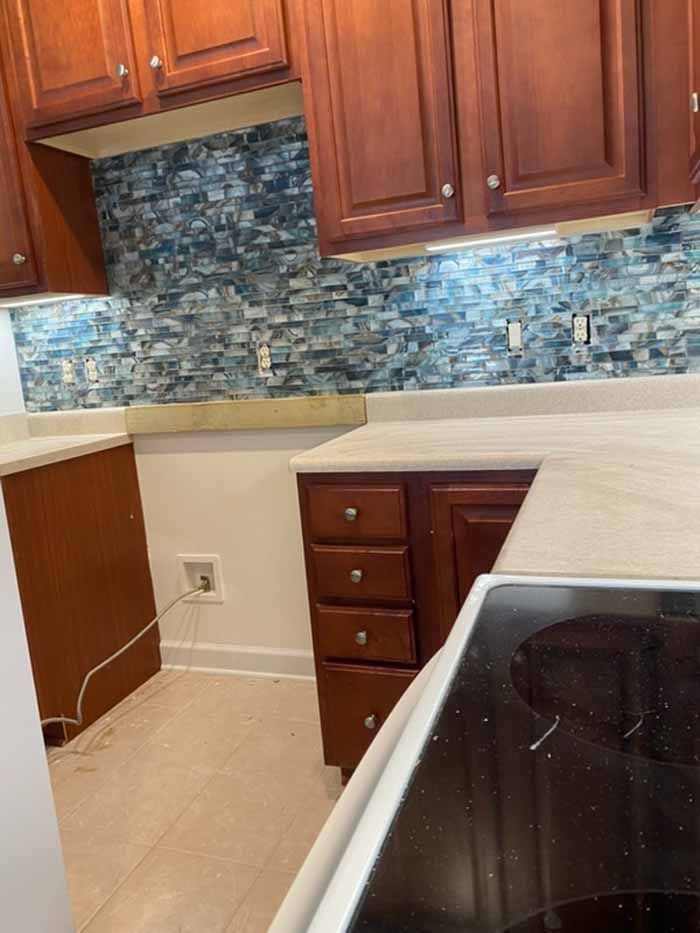
How Tile Selection Affects Durability and Maintenance
Glass and polished porcelain tiles resist staining better than natural stone but show water spots more readily, while matte ceramic and textured stone hide minor wear but require sealed grout lines to prevent discoloration. The tile material determines how the backsplash responds to direct heat from stovetops, with natural stone and certain ceramics tolerating higher temperatures than some glass varieties that can crack under thermal stress.
Once installation is complete, you'll notice the wall surface wipes clean without leaving residue in paint texture, and moisture no longer penetrates behind the cooking area where steam concentrates. The sealed grout lines form a continuous barrier that prevents water from reaching the drywall, and the tile surface reflects light differently than paint, which changes how the kitchen appears under both natural and artificial lighting.
The backsplash protects the wall structure but does not extend to countertops or cabinetry unless specified, and the installation does not include repair of underlying drywall damage that existed before tile placement. Outlet covers are removed and reinstalled after tiling, and any necessary electrical adjustments are coordinated separately from the tile work itself.
Questions About Backsplash Materials and Installation
Homeowners in Bolivia often ask about material performance and maintenance requirements before selecting tile types and grout colors for their kitchen walls.
What determines which tile material works best behind a cooktop?
Heat tolerance varies by tile type, with porcelain and natural stone handling direct heat exposure better than certain glass tiles that may crack when subjected to repeated temperature changes from gas burners or electric coils.
How long does grout need to cure before the backsplash can be cleaned?
Grout requires 72 hours to cure fully before applying sealant, and the sealed surface can be cleaned with standard kitchen products after the sealant dries for an additional 24 hours.
Why do some backsplashes show discoloration along grout lines over time?
Unsealed grout absorbs cooking oils, food particles, and moisture that create permanent staining, which is why proper sealing during installation and periodic resealing prevent this accumulation in high-use kitchens.
What preparation does the wall need before tile installation begins?
The wall surface must be clean, dry, and structurally sound, with any existing damage repaired and the area cleared of outlet covers, with power temporarily disconnected to those circuits during tile placement.
How does backsplash installation in coastal areas like Bolivia differ from inland locations?
Higher humidity levels require attention to moisture barriers and proper ventilation during grout curing, and material selection accounts for the salt air exposure that can affect certain sealants and adhesives over extended periods.
Royal home Improvements provides material samples and layout planning to help you evaluate how different tile options will perform in your specific cooking environment. Schedule an on-site assessment to review wall conditions and discuss design options that match your kitchen's functional demands.